A Timeline Guide for Businesses
Planning an Office Renovation? Understanding the Timeline Can Help You Prepare
When businesses start planning an office renovation, one of the most common questions is:
"How long will the renovation take?"
Whether you’re moving into a new office, upgrading an existing workspace, or planning a complete office fit-out, understanding the renovation timeline can help you prepare your team, minimise disruption, and coordinate business operations more effectively.
The reality is that every office renovation project is different. The timeline can vary depending on factors such as office size, project scope, design requirements, building approvals, and construction complexity.
This guide explains the stages of an office renovation project and the factors that may influence how long the process takes.
Key Takeaways
- Office renovation timelines vary depending on project scope and complexity.
- Planning and design are often as important as the construction phase.
- Office size, approvals, and customisation requirements can affect timelines.
- Early preparation can help businesses avoid unnecessary delays.
- Working with an experienced office renovation team can help streamline project coordination.
What Factors Affect an Office Renovation Timeline?
No two office renovation projects follow exactly the same schedule.
Several factors can influence how long the project takes from planning to completion.
Office Size
Larger offices generally require more extensive renovation works.
This may involve:
- Additional partitioning
- More flooring and ceiling works
- Increased electrical installations
- Larger quantities of furniture and fixtures
As office size increases, construction and installation timelines may also increase.
Scope of Renovation
A simple office refresh may take less time than a complete workplace transformation.
Projects may range from:
- Cosmetic upgrades
- Workspace reconfiguration
- Office interior redesign
- New office fit-outs
- Multi-department renovations
The broader the scope of work, the more planning and coordination may be required.
Design Complexity
Projects involving customised elements may require additional design development and production time.
Examples include:
- Custom carpentry
- Feature walls
- Reception counters
- Branded workplace elements
- Specialised meeting spaces
More customised projects often involve additional coordination before construction begins.
Building Approvals and Requirements
Depending on the building and project scope, approvals may be required before renovation works can commence.
These requirements can vary depending on:
- Building management procedures
- Landlord requirements
- Contractor submissions
- Access arrangements
Businesses should account for approval timelines when planning renovation schedules.
Typical Stages of an Office Renovation Project
While every project differs, most office renovations follow a similar process.
Stage 1: Consultation and Site Assessment
The process often begins with understanding the business’s goals, workplace challenges, and operational requirements.
This stage may involve:
- Site visits
- Workplace assessments
- Requirement gathering
- Initial discussions
The objective is to establish a clear understanding of the project before design work begins.
Stage 2: Space Planning and Interior Design
Once project requirements have been established, design development can begin.
This stage may include:
- Office space planning
- Layout development
- Material selection
- Design concepts
- Workplace visualisations
A well-defined design helps guide subsequent renovation works.
Stage 3: Budgeting and Project Planning
Before construction starts, businesses typically finalise:
- Project scope
- Budget allocation
- Construction schedules
- Procurement requirements
- Contractor coordination
Careful planning at this stage can help reduce disruptions later in the project.
Stage 4: Renovation and Construction Works
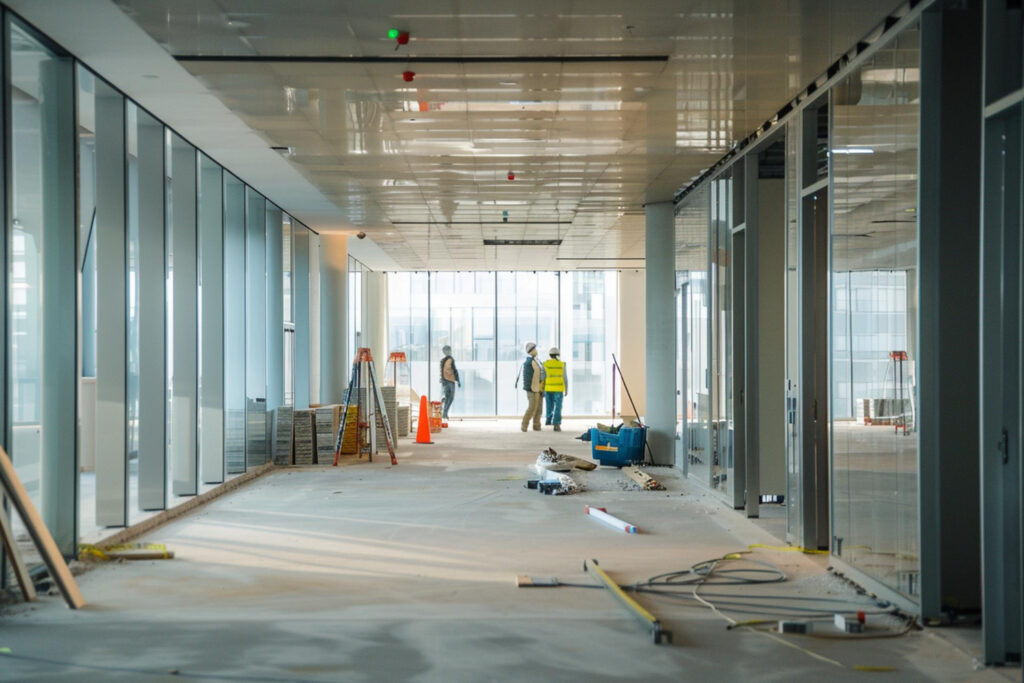
This is often the most visible stage of the project.
Depending on the scope, works may include:
- Demolition
- Partition installation
- Ceiling works
- Flooring installation
- Painting
- Electrical works
- Carpentry
- Furniture installation
Construction timelines vary depending on project size and complexity.
Stage 5: Final Inspections and Handover
Before the office is occupied, the completed space is typically reviewed to ensure works have been completed according to project requirements.
This stage may include:
- Quality checks
- System testing
- Final touch-ups
- Handover preparations
Once completed, the office is ready for business operations.
How Can Businesses Avoid Renovation Delays?
While some factors may be outside a company’s control, several steps can help reduce the risk of delays.
Start Planning Early
Many businesses underestimate the amount of planning required before construction begins.
Starting discussions early allows time for:
- Design development
- Budget planning
- Building approvals
- Material selection
Define Project Objectives Clearly
Changes during construction can affect both project timelines and budgets.
Having clear objectives from the outset can help minimise revisions and unexpected delays.
Consider Future Needs
Planning for future growth during the design stage may help reduce the need for major modifications later.
Engage an Experienced Renovation Partner
A coordinated approach to design, planning, and project management can help streamline communication and project delivery.
Should Renovation Be Scheduled During Business Operations?
This depends on the scope of work and the nature of the business.
Some organisations choose to:
- Renovate during office relocations
- Schedule works after business hours
- Implement phased renovations
- Temporarily relocate departments
The most suitable approach will depend on operational requirements and project complexity.
Frequently Asked Questions About Office Renovation Timelines
How long does an office renovation typically take?
Project timelines vary depending on office size, project scope, design complexity, approvals, and construction requirements.
What stage of the renovation process usually takes the longest?
The construction phase is often the most time-intensive, although planning, design development, and approval processes can also influence overall project duration.
Can office renovations be completed while employees continue working?
Depending on the project scope, renovation works may sometimes be phased to minimise disruption to business operations.
How early should businesses start planning an office renovation?
Many organisations begin planning several months before their intended renovation date to allow sufficient time for design, budgeting, approvals, and scheduling.
Do office fit-outs take longer than office renovations?
Not necessarily. Timelines depend on project complexity, scope of work, and the condition of the space being prepared.
Planning an Office Renovation Timeline?
Every office renovation project has its own requirements, challenges, and schedule. Understanding the renovation process early can help businesses prepare more effectively and make informed decisions throughout the project.
Whether you’re planning a workplace refresh, office relocation, or complete office fit-out, having a clear roadmap can make the renovation journey smoother and more predictable.
Get Expert Advice on Your Office Renovation Plans
Not sure where to start with your office renovation project?
Office Interior (Singapore Interior Group Pte. Ltd.) has been helping businesses across Singapore transform offices, clinics, commercial spaces, and workplaces since 1993. Our team can help you understand the planning process, timeline considerations, and renovation options available for your workplace.
Whether you’re upgrading an existing office, moving into a new space, or planning a complete office fit-out, we’re here to help you plan with confidence.